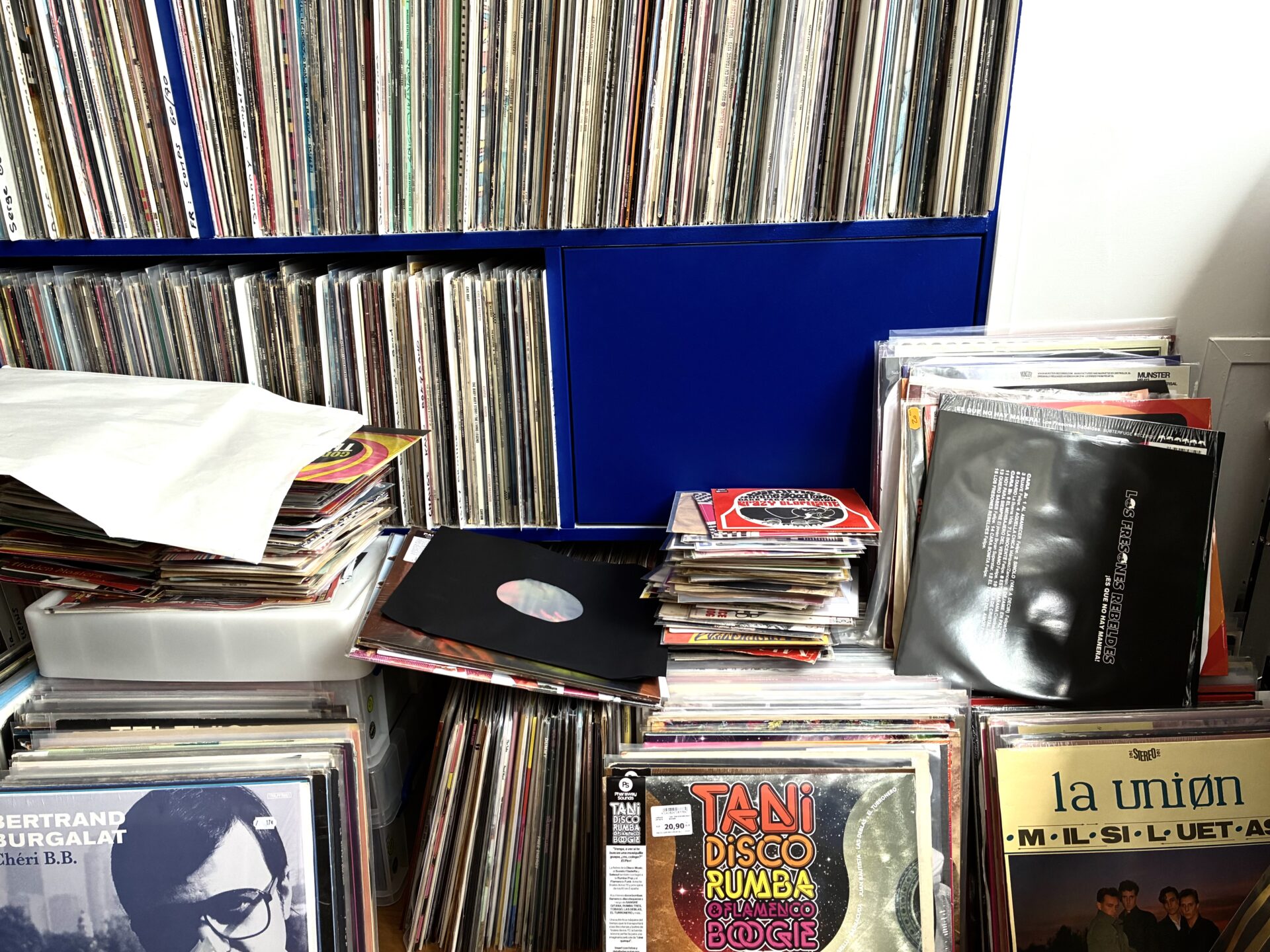
The Agent Orange Trump has decided to slap hefty tariffs on imports, especially from Europe. Bandcamp and Discogs have both weighed in on the matter and are waiting to see what happens. Whatever the outcome, it’s just another rusty nail in the coffin of the physical record. Welcome to the Rust Age!
A perspective on the evolution of the vinyl hobby from the European Union.
The 2000s and 2010s: Vinyl’s Golden Age (Even While the Rest of the Industry Burned)
In the 2000s, the physical music market as a whole was collapsing at breakneck speed as peer-to-peer file sharing took over. Yet for vinyl, second-hand records, and international trading, those years were anything but gloomy. With just a few clicks on eBay, you could suddenly get your hands on James Brown’s entire discography on wax. Ordering records from the United States, Quebec, or Japan had never been easier.Then Discogs came along and took the baton; within a few short years, the world of record collecting was turned upside down. No more praying for a rare copy to magically show up at one of your usual suppliers — you could now hunt it down at the source, or pretty close to it!
Shipping costs were high, sure, but manageable. We all helped each other out. People would pool orders on forums to bring in albums that weren’t distributed in Europe. Another classic trick, well known to the most hardcore among us, was to buy several records from the same seller to spread the postage. As for me, I treated myself. I took the opportunity to beef up my 45s collection — garage-rock singles, Quebec records, you name it! In theory, there were customs duties, but records almost always slipped through the cracks thanks to the exemption threshold. During that whole period I never once paid a cent in duties, despite dozens and dozens of purchases.
Back then, vinyl was unmistakably a niche, underground market. In the following decade, the format made a spectacular comeback in the collective imagination and became a serious revenue stream for record labels once again. That change in status has undoubtedly played a big part in landing us in the far less friendly situation we face today.
The 2020–2021 Turning Point
In the early 2020s, the price of new vinyl records absolutely skyrocketed. On top of that, buying records from outside the EU now exposes you to double (or even triple) VAT payments plus handling fees! Every buyer ordering from the UK or the US has had that nasty surprise at least once: having to pay again upon delivery even though the merchant had already collected the VAT through the IOSS (Import One-Stop Shop) system.
Broadly speaking, this shift had been coming for a while. The war in Ukraine, COVID, and other events profoundly reshaped global dynamics. Record trading is just a very distant (and secondary) casualty of a much tenser political and economic climate. These days, we’re all a little more wary of one another.
The price surge isn’t only due to the new non-EU VAT collection rules or even the fallout from the Ukraine war and COVID. A big part of the problem lies in the music industry’s revenue structure itself. With streaming exploding, labels and artists are scrambling to make money any way they can besides CD sales. Jacking up vinyl prices to fatten margins has clearly been one of their go-to strategies. In fact, vinyl prices have far outpaced inflation in recent years. I ran the numbers on a few titles I bought about fifteen years ago: the price increase has been roughly 20% higher than inflation alone would justify! Where you used to be able to afford five albums, now you can barely stretch to four — and that’s without even factoring in inflation (which often eats into purchasing power even more).
The Rust Age Has Only Just Begun
I’m pretty pessimistic about the situation, at least here in the European Union. In the short term, nothing positive is on the horizon that could reverse the cycle. At best, we might hope for a plateau — the lesser evil. In fact, prices at French record stores already seem to be stabilizing and probably won’t climb any further anytime soon (at least that’s my take). The damage, though, is already done. Record shops are struggling across Paris and continental Europe. The closure of Discos Revolver in Barcelona or the troubles at Les Balades Sonores in Paris are early warning signs of a market that’s increasingly seizing up and of a deep shift in the very nature of demand. Prices have simply become too high for European wallets — especially for the regular, long-time customers who used to keep the scene alive.
The circulation of records is getting harder and harder. Sure, it’s not as vital as it once was now that you can stream anything, but it’s still a cultural — even spiritual — loss. Those cross-border exchanges were a way of reaching out to others, and that feels like an essential value in these times of withdrawal and suspicion.It’s also hitting independent labels hard. Domestic markets (even the whole EU combined) don’t always provide enough demand for them to survive. The customs headaches and soaring prices are creating real problems for North American and British indie labels too — they’ve long relied on a healthy European market to stay afloat. So this issue goes far beyond just France or even the borders of the EU.
Let’s try to stay optimistic: this “Rust Age” might just be a painful contraction, and the format will surely have brighter days again. Still, it should be a wake-up call. We need to keep supporting the whole ecosystem if we want to keep the joy of walking into a record shop and stumbling on a gem. There’s nothing quite like ripping the shrink-wrap off a new vinyl and dropping the needle into the groove. I’d love to hear how things feel where you are — US, UK, Canada, Japan, wherever. Are you still hunting internationally? Have prices killed the fun for you too?
Related posts:
 OPINION: Le revival K7 est-il en marche ?
 OPINION: en art, le travail ne paie pas toujours
 SHOPPING: Achats du 3 et 4 février 2025
 45 TOURS: Gnome « I Like It » (Goblin, 2025)
 EXPO: « Disco, I’m Coming Out » à la Philharmonie de Paris
 OPINION: les Nouvelles du Front (subvention, aider les indés, cds)
 Mes 5 disquaires favoris à Barcelone (2025)
 ALBUM: Autocamper « What do you do all day? » (Slumberland, 2025)
anglais niveau google traduction lol
on fait ce qu’on peut !