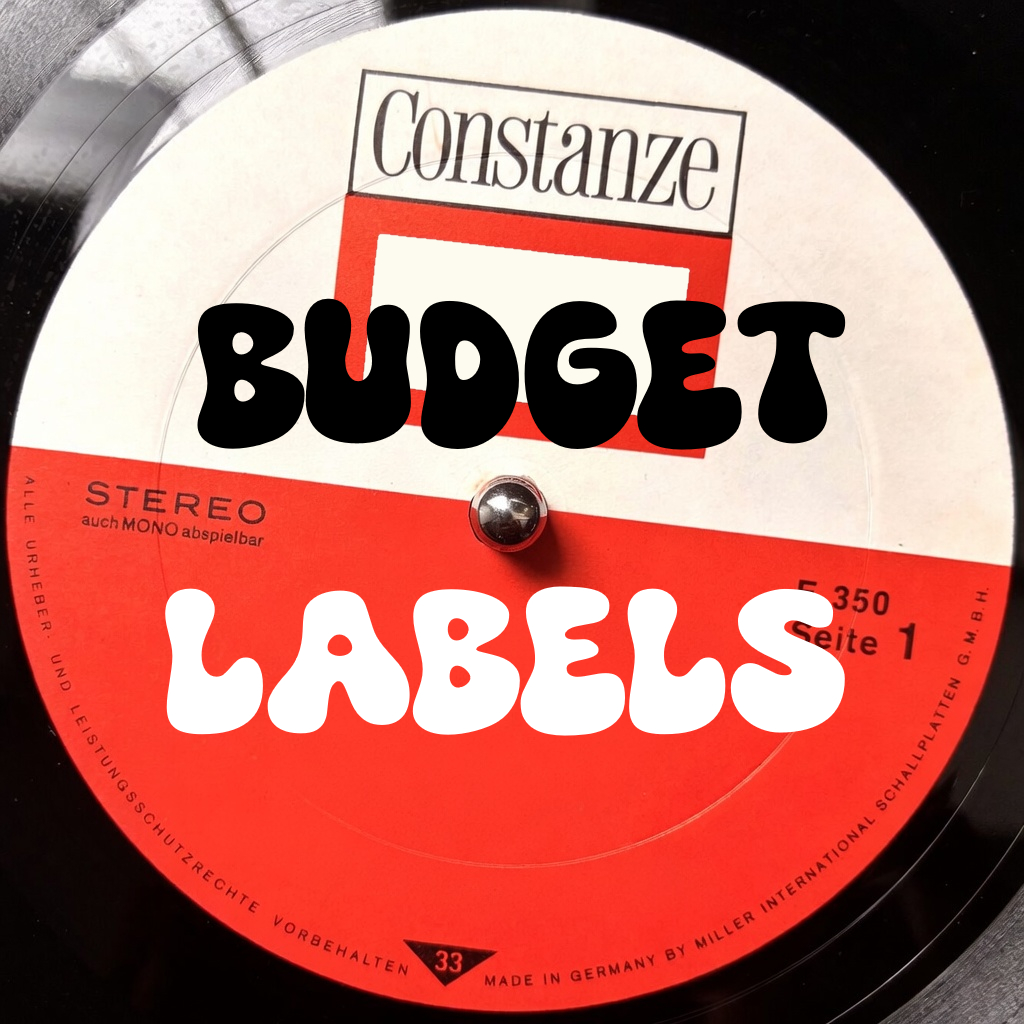
In the 1960s and 1970s, your parents or grandparents didn’t always buy their records from the record shop in the town centre. Often, the temptation was right next to the checkout, in a metal display rack at a supermarket, gas station, or department store. These cheap records, with attractive artwork, produced by specialist budget labels, played a discreet but important role in popular music culture of the era, on the margins of the official narrative dominated by major releases from EMI, RCA, and the like.
The selection was abundant and varied: lots of sound-alikes (very close covers of current hits), of course, but also clever compilations, rarities, and more unexpected productions. Different from tax scam labels or records self-produced by communities (such as the Hare Krishna pressings), budget labels tell another story of accessible pop music that is often fascinating.
Budget Labels
At the end of the 1950s, budget labels grew very strongly in the United States and then in Europe. The true pioneer of the genre remains Tops, which from 1947 offered budget vinyl after reselling used records salvaged from jukeboxes. In the 1950s, one of the major players in the genre, still in the US, emerged: Pickwick. It was later joined by outfits like Somerset/Alshire or Diplomat.
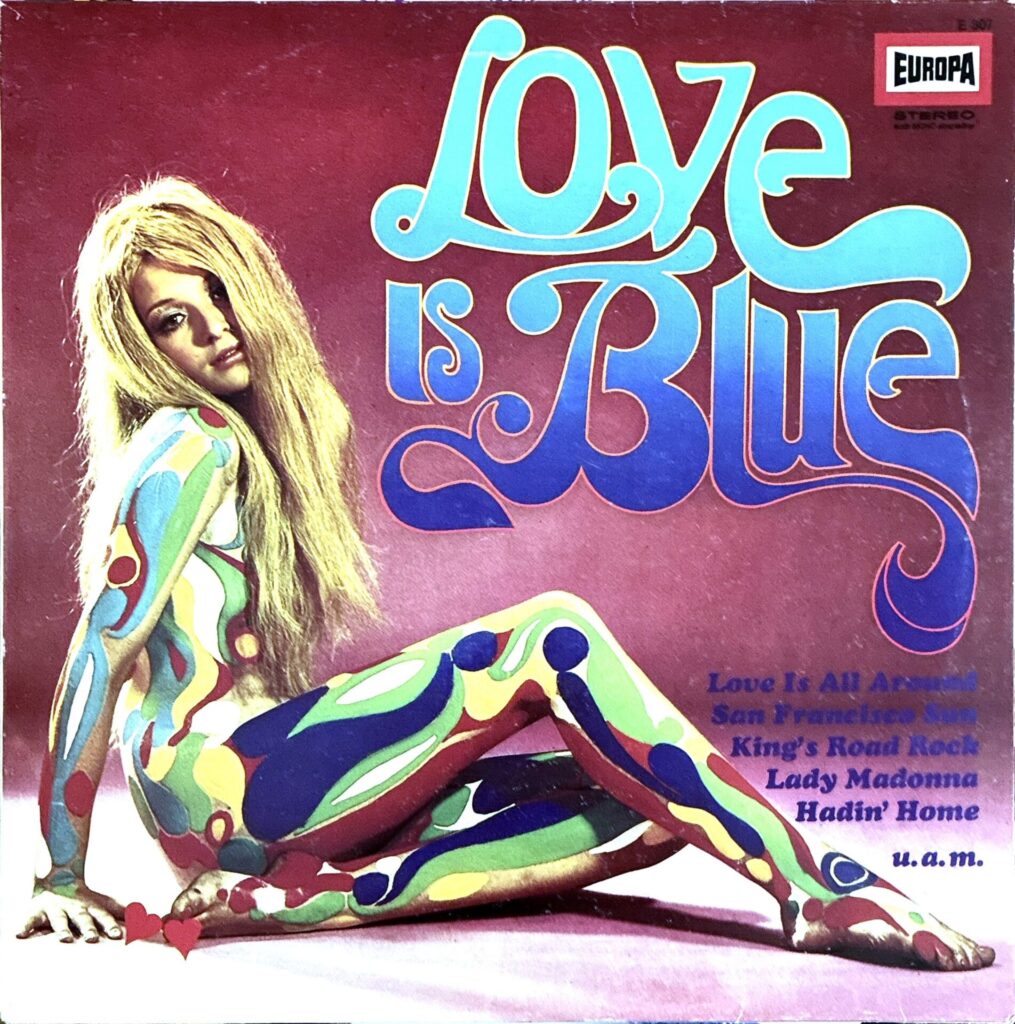
In Europe, budget labels arrived much later, in the mid-1960s. EMI’s MFP (Music for Pleasure) subsidiary took the lead from 1965 onward. Britain also had other players such as Hallmark (Pickwick), Marble Arch (PYE), Embassy, and Camden (RCA). The continent had a few specialist players, notably Europa in Germany and Musidisc/Visadisc in France.
Sometimes backed by major labels, sometimes independent, the budget label concept was always the same: offering vinyl records (mostly LPs) at half the standard price through mass market channels. Budget labels preferred newsstands, supermarkets, photo shops, and appliance stores over traditional record shops. Their catalogues were as varied as they were inconsistent. They could include cheap covers, back-catalogue material from well-known artists, or even almost unreleased records!
Future Stars
Budget labels gave many musicians the chance to hone their craft, especially in the sound-alike cover field. Some of them later became major stars, only to be covered in turn by these anonymous cover groups.
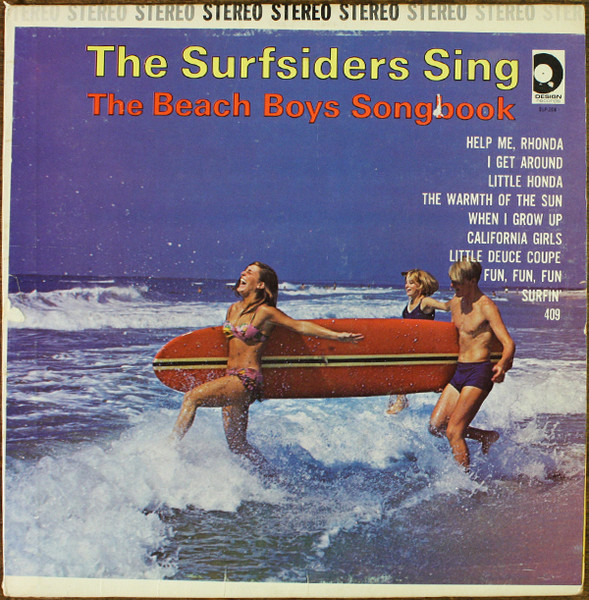
There are many examples in English-speaking countries, especially the United States. Lou Reed began his professional music career working for one of these budget labels: Design Records, a Pickwick subsidiary! Collectors have identified his voice on two tracks (Surfin’ and Little Deuce Coupe) from the album Sing The Beach Boys Songbook by The Surfsiders, released in 1965. The legendary Dolly Parton also did session work on this type of compilation early in her career. She released her first singles in the late 1950s, but in the early 1960s she needed to make a living. In 1963, she recorded a covers album for the Somerset label (Hits Made Famous by Country Queens), one of the sector’s pioneers.
Closer to home in Britain, many singers also recorded this type of cover. The most famous is none other than Sir Elton John, still using his birth name Reg Dwight. He appeared on numerous compilations such as Hallmark Records’ Top of the Pops series. He can be heard, for example, on the track Snake in the Grass from Volume 5. In 1994, the British label RPM compiled his covers on the album Chartbusters Go Pop. Elton John sometimes crossed paths with David Byron of Uriah Heep, who was also a regular on these compilations. They can even be heard as a duo on a cover of Badfinger’s Come and Get It!
Classic Compilations
Budget labels didn’t just produce straight covers of current hits. Some had access to the catalogues of more prestigious labels and therefore released compilations of well-known artists aimed at the mass market. Over the years, some of these records have become cult items.
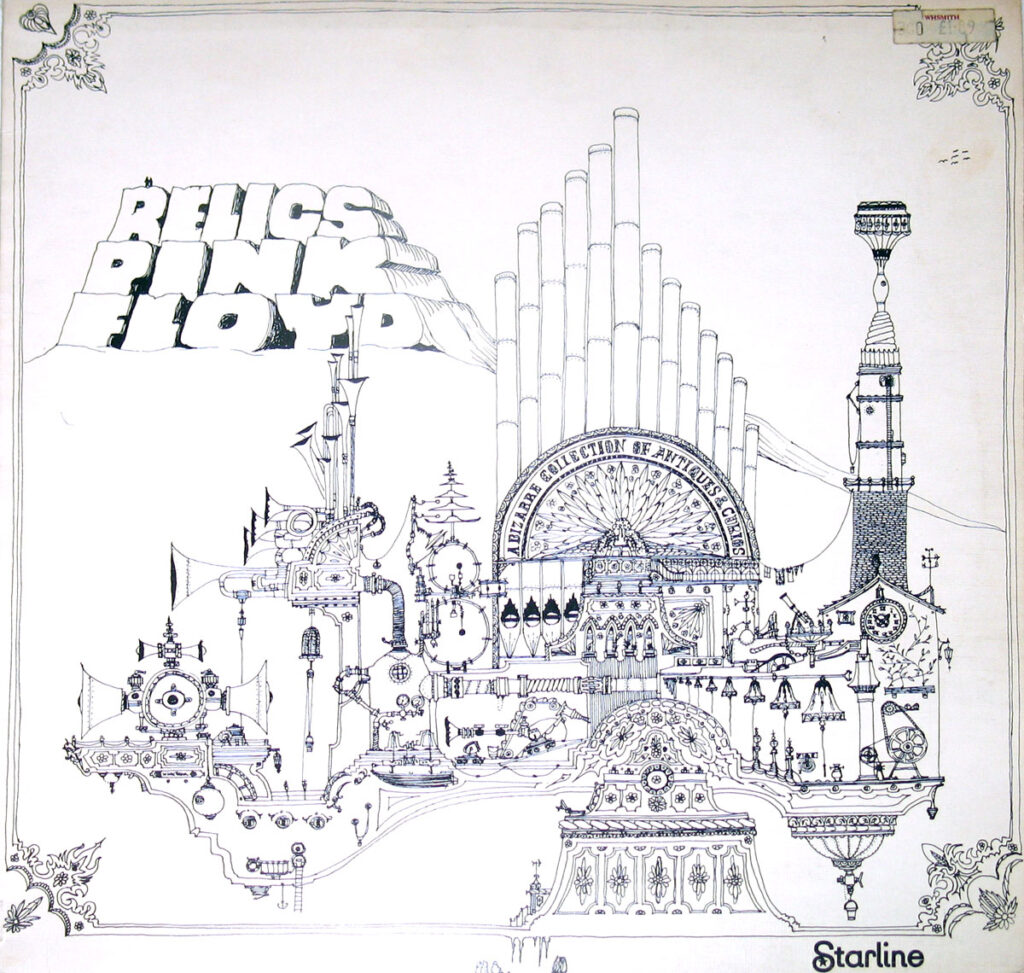
The most famous and interesting example is Pink Floyd’s Relics (1971) on Starline/MFP. Behind a very successful cover by Nick Mason, it featured an excellent selection of early Pink Floyd tracks: some from the first three albums, singles tracks (Arnold Layne, See Emily Play, Paint Box, etc.), and a completely unreleased song from the Ummagumma sessions: Biding My Time.
Another cult budget compilation is T. Rex’s Ride a White Swan (1972) on MFP. To keep Marc Bolan’s catalogue alive, the British label dipped into his early psychedelic folk albums such as Unicorn, A Beard of Stars, and Prophets, Seers & Sages. Right in the middle of the glam-rock era, the choice was bold, but it allowed many young people to discover this side of T. Rex and remains highly regarded by connoisseurs.
Producer Mickie Most also got his own dedicated compilations on MFP. The Most of The Animals and The Most of Herman’s Hermits (1971) were big chart successes! For the Manchester band, it was even their best album chart performance, reaching No. 14 with five weeks on the chart. For Eric Burdon’s group, the MFP release was a reissue of an earlier compilation that had reached No. 4 in 1966.
You might also be surprised by this other curiosity: the 1972 compilation Spirit of Rock. This Probe label sampler (sold via MFP, naturally) contains a very rare Steely Dan track: Dallas. The song was supposed to be the group’s first single, but the label changed its mind because the country sound might have given a misleading image of Becker and Fagen’s band. A few copies were released but quickly ditched. Outside of this compilation, you had to wait until the late 1970s to hear Dallas on a record! Today the track remains quite rare, and Spirit of Rock is one of the most accessible ways to find it on physical format.
The Europa Case
Founded in 1956 by American expatriate David L. Miller and two Germans (Wilhelm Wille and Andreas Erich Beurmann) in Quickborn near Hamburg, Europa offered a fascinating catalogue throughout the 1960s and 1970s.
Miller was no stranger to budget labels: he had also founded Somerset, which became Alshire in 1963 after being sold to Al Sherman. Europa regularly drew from the American label’s catalogue (notably 101 Strings). Better still, the German label produced its own material, which brought it great success. Like many niche labels, they specialised in children’s stories (Hörspiele in Germany). However, Europa interests us for another reason: an astonishing quantity of almost-original psych/hard rock records!
Like its competitors, Europa made some sound-alikes, sometimes supplemented with original tracks to avoid paying too many royalties. The label therefore gave free rein to a gang of rock musicians nicknamed the Hamburg Mafia to record whatever came into their heads. Beyond the stylistic constraints (easy listening, beat, hard rock) and a few covers, these were sometimes high-quality original albums of German psychedelic rock.
The core of the Hamburg Mafia included Peter Hesslein (guitar), Dieter Horns (bass), Herbert Bornholt (drums), Rainer Baumann (guitar), George Mavros, Peter Hecht, and Joachim Rietenbach (drums). Much of the group had already played in the excellent beat band The German Bonds. They later played in Lucifer’s Rising, Asterix, The Rattles, or with James Last!
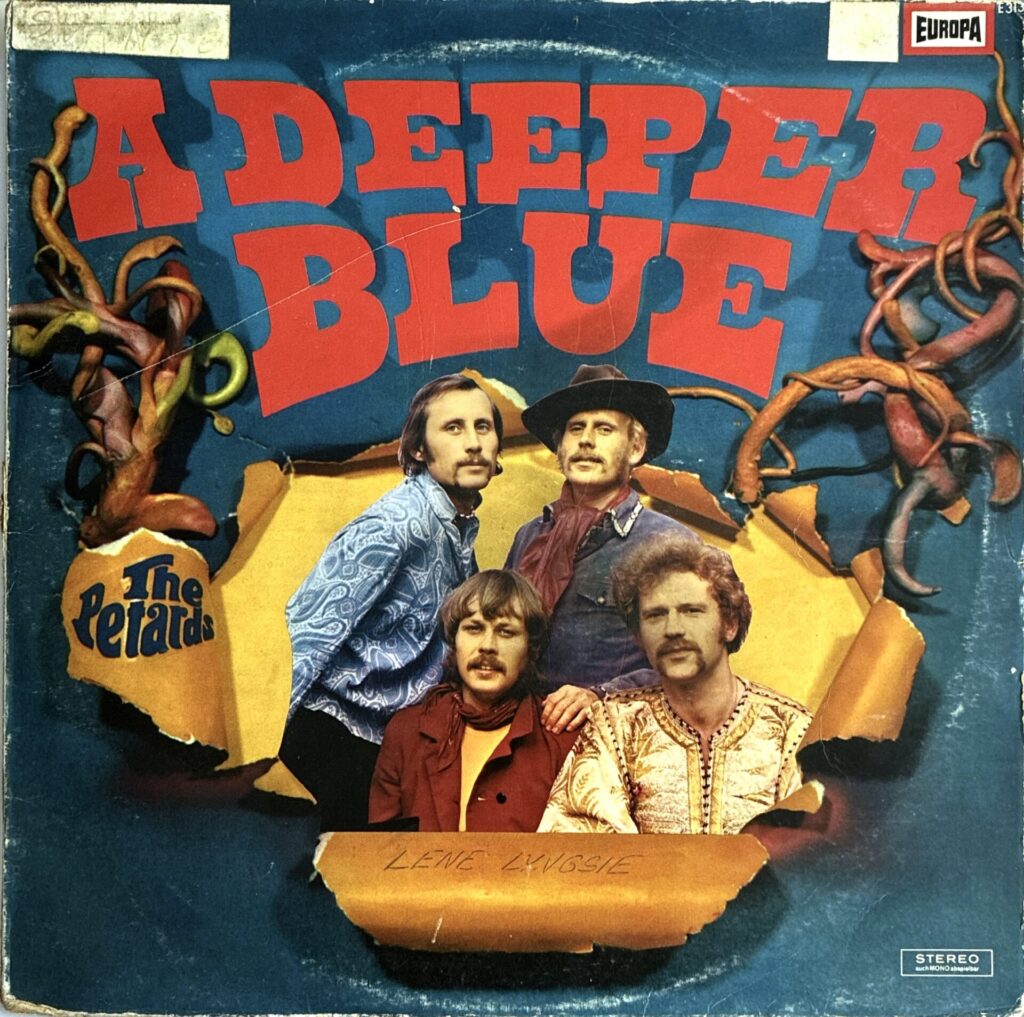
The team released many excellent records for Europa under pseudonyms such as Hell Preachers Inc, Electric Food, The Pink Mice, and Bokaj Retsiem (Jacques Brother reversed in German). In addition to the Hamburg Mafia, Europa also recorded the excellent beat/psych band The Petards and the future Wind under the unlikely name Corporal Gander’s Fire Dog Brigade! The German label also released some North American rarities, such as the fantastic The Animated Egg.
Budget Labels: A Universe Worth Rediscovering
With budget labels, the worst sits alongside the very best. When you start digging regularly, you quickly learn to avoid sound-alike compilations because they are often unexciting. Seeing the MFP or Marble Arch logo doesn’t always promise happy days ahead. And yet! Here and there are absolute gems, classics, or curiosities that are too interesting to pass up. It’s now up to you to go hunt for these records at the bottom of a dusty bin!
For Further Reading
- An article on records at Woolworths
- The English Wikipedia page on budget albums
- An article from the American market perspective
- A list of all Elton John’s contributions as a studio singer
This is a translation of our own article in French.
Related posts:
 CURIOS: les Labels Budget
 PLAYLIST: Dix albums vinyles à moins de dix euros #9
 PLAYLIST: Tous fans des Beatles
 COMPILATION: V/A « Sex Sweat & Blood » (Beggars Banquet, 1982)
 PLAYLIST: Disco-Rock ! #2 (1975-1979)
 SHOPPING: Achats du 27 juin -5 juillet 2024
 SHOPPING: Achats du 21 novembre 2024 (Bastille)
 PLAYLIST: Inventaire 2024, troisième partie