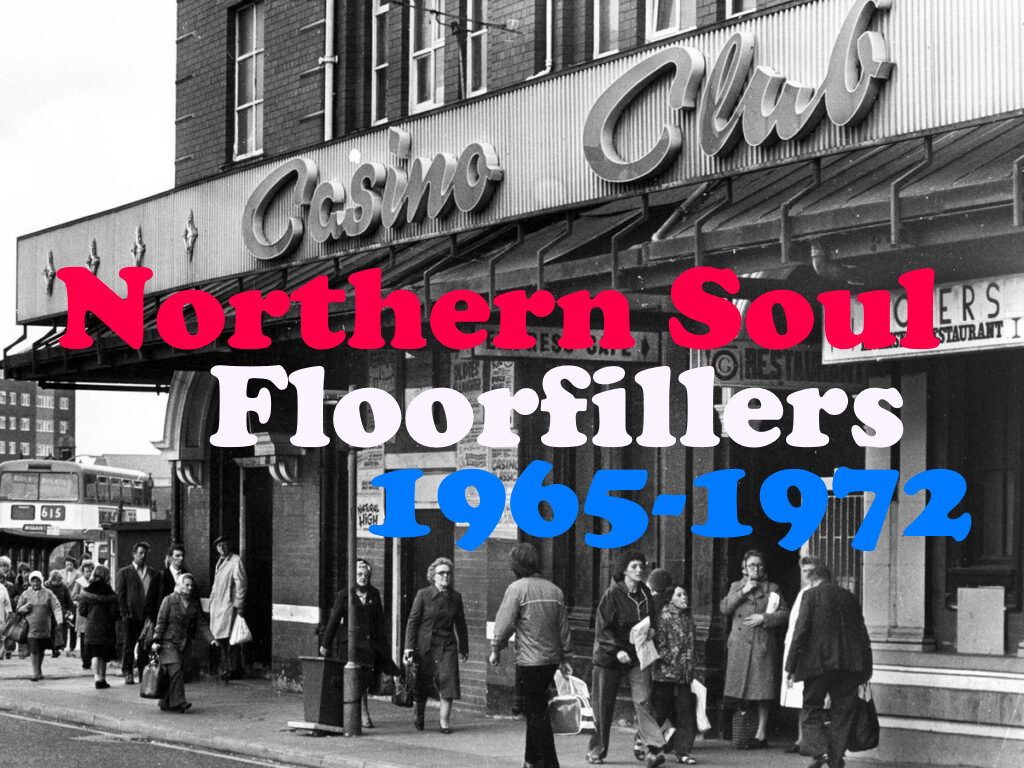
Over the past year or two, Northern Soul has found a new lease of life. Videos of enthusiastic dancers from the Bristol Northern Soul Club have gone viral on TikTok, followed by features in major publications both in the UK (The Guardian) and the United States (The New York Times). It’s hard not to be thrilled by this renewed interest in a genre that is also a genuine way of life. Northern Soul is almost a religion: every weekend is a mass (the all-nighter), where the preacher (the DJ) distributes the holy communion (the 45s), igniting the fervor of the faithful.
Intuitively, one might be tempted to contrast Northern Soul with Southern Soul. Stylistically, that opposition makes sense, but the origins of the terms are not symmetrical: “Southern” refers to the American South, while “Northern” points to the North of England… for American productions. Northern Soul belongs to that family of genres named long after they actually existed (like Freakbeat or Garage Rock). The term itself was something of a happy accident, partly thanks to the customers of a record shop and the commercial savvy of its owner, Dave Godin. From 1968 onwards, the journalist and owner of Soul City noticed that fans of northern English football teams weren’t asking for new releases, but instead kept requesting older records in a very specific style. He first used the term in his column for Blues & Soul magazine in June 1970, and it stuck.Dave Godin may have coined the name, but he didn’t create the phenomenon he observed at Soul City. The movement developed at the end of the 1960s and the beginning of the following decade in the North of England and the Midlands, following in the footsteps of the Mod scene, which was splintering into different directions. While London Mods were discovering psychedelia and others (the Hard Mods) were embracing Jamaican ska, those loyal to soul — and especially Motown productions — packed the dancefloors of the Twisted Wheel (Manchester), the Mecca (Blackpool), the Golden Torch (Stoke-on-Trent), and the Catacombs (Wolverhampton).
The demand from the public pushed DJs (Ian Levine, Colin Curtis, Carl Dene, Kev Roberts, Russ Winstanley, and others) to dig deeper and deeper, hunting for records their rivals didn’t have.Very quickly, a typical Northern Soul sound emerged (even if there are always exceptions): an uptempo beat (perfect for amphetamine users), a strong rhythm, rich arrangements, and passionate vocals. These stompers, mostly produced in the mid-1960s, often followed the model of Berry Gordy’s big Motown hits, which many labels — especially in Detroit (such as Ric-Tic) — tried to imitate. DJs were defining the style at the very moment it was being eclipsed by Philly Soul and the psychedelic experiments of The Temptations. This led a whole generation to passionately dig through warehouses across the United States in search of untouched gems. The competition between DJs was fierce and no holds were barred — from hiding labels to deliberately mislabeling records to stop others from finding the source. Some rarities became legendary and fetched insane prices. A reissue market soon emerged with labels like PYE Disco Demand, Mojo, and Soul City.
Fascinatingly, some tracks became (minor) hits almost a decade after their original release. On a smaller scale, Belgium experienced a similar phenomenon with Popcorn. The North of England thus cultivated its own distinct subculture, which reached its peak with the Wigan Casino in the 1970s (the venue closed in 1981) under the banner Keep the Faith. This spirit helped fuel the British love for clubbing and undoubtedly influenced the emergence of venues like the Haçienda in 1982. Dancers developed increasingly acrobatic moves, blending choreography inspired by African-American groups with karate-influenced high kicks. Baggy, flowing clothes — gradually moving away from the sharp Mod look — created a spectacular ballet for newcomers during the all-nighters. Each dancer identified with their club the way others identify with a football team. They would travel long distances by bus to attend the Saturday night service that lasted until 8 a.m. the next morning. DJs competed in creativity to satisfy the demanding dancefloor, creating venue-specific anthems and signature sequences like the 3 Before 8 that closed nights at the Wigan Casino. While most productions were American and Black, the most adventurous DJs also slipped in similarly uptempo pop tracks.
Paradoxically, at the height of the Mod revival in the early 1980s, the popularity of Northern Soul began to wane after more than a decade of filling dancefloors across the North and the Midlands. The first split occurred in 1974 when Ian Levine introduced a new track into his sets: It Really Hurts Me Girl by The Carstairs. Some followed him and other figures (like Richard Searling) toward Modern Soul, while the majority remained loyal to 1960s material. Having survived the Disco explosion (which shared some musical DNA with Northern Soul), the genre was eventually overtaken by the emerging club culture of the ’80s and the House revolution. Many Northern Soul DJs bridged the gap between Soul and House/Techno — most notably Neil Rushton, who organised Northern Soul nights before producing the pioneering compilation Techno! The New Dance Sound of Detroit.
Sixty years later, this music retains all its evocative power and universality. Many artists have drawn inspiration from Northern Soul — for the better (Soft Cell) and sometimes for the not-so great (SAW, aka Stock Aitken Waterman). The obsessive quest for that ultimate 45, the holy grail capable of moving a crowd, also fed into the Rare Groove scene. British audiences have kept their special affection for soul music in the decades that followed, through bands like The Style Council, the brilliant Dexys Midnight Runners, and the Acid Jazz scene, itself born at the crossroads of British funk and the Mod revival.
01 – Frankie Valli & The Four Seasons « The Night » (1972)
Frankie Valli and the Four Seasons are one of the major doo-wop groups of the early 1960s. They also produced some absolutely beautiful pop and blue-eyed soul tracks throughout the decade. The 1970s were more challenging, but the group still released the magnificent « The Night« . This is a late classic (1972) that nevertheless feels stylistically perfectly in line with their sound! The song was a commercial flop on its initial release, but it became a major hit three years later when Britain fell in love with Northern Soul, going on to sell over 200,000 copies in the UK.
02 – Chuck Wood « Seven Days too Long » (1967)
Chuck Wood released four singles in the 1960s. In the following decade, « Seven Days Too Long » became a Northern Soul classic, to the point of being reissued by Pye and, most notably, covered by Dexys Midnight Runners.
03 – Little Anthony & the Imperials « Gonna Fix You Good » (1966)
In 1976, « Better Use Your Head » by Little Anthony and the Imperials became a big hit on the Northern Soul scene. This reissue of a 1966 track is paired with the magnificent « Gonna Fix You Good« , also from 1966, which was covered at the time by the Alan Bown Set.
04 – Frank Wilson « Do I Love You » (1965)
An absolute ultimate Northern Soul classic and probably the most expensive record in this selection! Paradoxically, it came out on the biggest label of them all: Motown. Only two copies of the record are known to exist (plus a third in poor condition). I’m wondering who the 50 clever souls who added it on Discogs actually are!
05 – The Precisions « If This is love (i’d rather be lonely) » (1967)
There’s something in The Precisions’ “If This Is Love” that captures the beauty of the greatest Four Tops records: that dramatic, epic quality while still being a pure dancefloor track. Singer Geno Washington recorded a cover version that remained unreleased for a long time but is now available on 7-inch, just like back in the day!
06 – The Showstoppers « Ain’t nothing but a house party » (1967)
The Showstoppers are a group from Philadelphia that notably includes two of Solomon Burke’s younger brothers, Alex and Laddie Burke. The line-up is rounded out by another pair of brothers: Timmy and Earl Smith. The band released around half a dozen singles, but the most memorable and famous one is undoubtedly « Ain’t Nothing but a House Party« , a 1967 release (I believe the French pressing came later). A fantastic up-tempo number that gives you itchy feet! Will you be able to resist the call of the dancefloor?
07 – Bobby Hebb « Love Love Love » (1966)
You surely know Bobby Hebb’s « Sunny« , but have you taken the time to explore his other songs? Here’s the excellent « Love Love Love« , a Northern Soul dancefloor classic, especially at Blackpool Mecca and the Wheel. The track is available on Bobby’s album, but also as the B-side of « A Satisfied Mind« . In 1972, « Love Love Love » appeared on the reissue of the « Sunny » 45 to meet demand from the Northern Soul scene!
08 – Spiral Starecase « More Today than Yesterday » (1969)
« More Today Than Yesterday » by the blue-eyed soul/sunshine pop group Spiral Starecase was one of the one-hit wonders of 1969, reaching the Top 10 in the US and Canada. The song also won over several Northern Soul DJs, including those at Wigan Casino. Its pop side may be debated among purists of soul, but it definitely earns its place in this selection!
09 – Dean Parrish « I’m on My Way » (1967)
An epic track from Dean Parrish with a raw, rocky fuzz guitar! « I’m on My Way » was discovered by Russ Winstanley, the DJ at Wigan Casino. Very quickly, the song became one of the club’s famous closers as part of the legendary « 3 Before 8 » (the last three tracks played before 8 a.m.). When Wigan Casino closed its doors in 1981, it was Dean Parrish’s voice that echoed through the venue for the very last time.
10 – Archie Bell & The Drells « Here I Go Again » (1969)
Although Archie Bell & The Drells were a Texan group, it was thanks to Philadelphia that they really made a name for themselves. The legendary duo Gamble & Huff wrote the superb « Here I Go Again« , in the same vein as classics like « I Can’t Stop Dancing » and « There’s Gonna Be a Showdown« .
11 – Al Wilson « The Snake » (1968)
« The Snake » is inspired by Aesop’s fable The Farmer and the Viper. The song was written by African-American civil rights activist Oscar Brown Jr. In 1968, Al Wilson scored a solid hit with the track, peaking at No. 27 on the Billboard Hot 100. A few years later, the song found a second life on the Northern Soul scene, where it became hugely popular. It is frequently ranked among the top 10 ultimate classics of the genre (often in the top 5 on many all-time lists).
12 – The Fascinations « Girls are Out to Get You » (1967)
The Fascinations were a female vocal group from Detroit, co-founded by Martha Reeves (before she formed Martha & The Vandellas). Produced by Curtis Mayfield, they released several singles in the 1960s, the standout being the wonderful « Girls Are Out to Get You« . It’s a joyful, upbeat floorfiller that was very popular at both the Wigan Casino and Blackpool Mecca!
13 – The Flirtations « Nothing but a Heartache » (1969)
« Nothing But a Heartache » by The Flirtations is a classic and a track that remains hugely popular to this day! It’s always in my vinyl crate when I DJ 1960s or soul sets. The Flirtations were originally from South Carolina. They released a few records in the United States, but it was after moving to England that they achieved real success. « Nothing But a Heartache » is indeed a British production! It was written by the songwriting duo Wayne Bickerton and Tony Waddington, who also wrote for the Spanish group Los Iberos, Tom Jones, and The Rubettes!
14 – Just Brothers « Sliced Tomatoes » (1965)
« Sliced Tomatoes » by The Just Brothers was sampled by Fatboy Slim. Originally released in 1965, the track was reissued in 1972 and immediately caught the attention of the Northern Soul scene. DJs like Ian Levine quickly added it to their playlists. However, this instrumental is quite atypical: it sounds more like a classic surf record than a typical groovy Detroit soul track — even though it was actually recorded in Detroit.
15 – Tami Lynn « I’m Gonna Run Away from You » (1965)
Tami Lynn, originally from New Orleans, Louisiana, scored a major hit in the United Kingdom with the brilliant « I’m Gonna Run Away from You« . Like Frankie Valli & The Four Seasons’ « The Night« , the song became a huge success years after it was originally recorded.Cut in 1965 (some sources cite late 1964), the track was written and produced by the legendary Bert Berns. It was discovered and recorded at the suggestion of Jerry Wexler of Atlantic Records, who spotted Tami Lynn at a music convention that year. Initially released on Atco/Atlantic with little impact, the song was reissued in 1971 on the Mojo label. It quickly became a massive floor-filler, reaching No. 4 in the UK charts.
16 – Mitch Ryder & The Detroit Wheels « Breakout » (1966)
A stopover in Detroit, in the Midwest, for Mitch Ryder and his Detroit Wheels. The singer’s output in the sixties oscillates between blue-eyed soul and garage rock. Break Out clearly leans towards the soul side and quickly becomes a dancefloor classic in Northern Soul clubs such as Wigan Casino and the Golden Torch.
17 – Marvin Smith « Have More Time » (1966)
Marvin Smith is a soul singer from Chicago. During the 1960s, he released four solo singles. He had previously been the lead vocalist of the sweet soul group The Artistics on the Brunswick label. Written by Barrett Strong (best known for the Motown hit “Money”), this song earned him huge support from Northern Soul DJs and became a classic at Manchester’s legendary Twisted Wheel club.
18 – Alice Clark « You Hit Me (Right Where it hurt me) » (1968)
This is a sublime track featuring an outstanding vocal performance by Alice Clark. I first discovered it on the brilliant After Hours series (strongly recommended!). Alice Clark enjoyed only a very brief career between 1968 and 1972. This uptempo New York soul classic was arranged by the legendary session musician Richard Tee, who worked with the likes of Carly Simon, Bill Withers, Diana Ross, and Billy Joel in the 1970s. The funk band Vulfpeck even dedicated a track to him! Originally recorded by Kim Weston, “You Hit Me (Right Where It Hurt Me)” is Alice Clark’s version that went on to become a Northern Soul favourite several years later.
19 – Nolan Porter « If I Could Only Be Sure » (1972)
Although “Keep On Keeping On” remains Nolan Porter’s best-known and most popular track on the Northern Soul scene, If I Could Only Be Sure (from the same 1972 album) is, for many, the real gem. In 2004, Paul Weller, the Modfather himself, recorded a superb cover of the song. Porter enjoyed a short but impressive career. He was once married to Candy Zappa (Frank Zappa’s sister), and members of The Mothers of Invention appeared on several of his records.
20 – Bobby Bland « Shoes » (1967)
Bobby Bland was an R&B and blues singer from Tennessee. While his music is rooted in Southern Soul, several of his records — most notably “Shoes” — gained huge popularity on the Northern Soul scene in the UK. The track even ranks at number 491 in Kev Roberts’ legendary Top 500. Like Scottish musician Edwyn Collins (Orange Juice), I find “Shoes” especially moving and graceful. Bland’s rich, deep voice pairs beautifully with the surprisingly delicate arrangements for a Southern production.
This article and playlist are a reworked version of some of my own articles (in French):
A small mix of mine, feat some songs of this list, recorded with 45rpm !
Related posts:
 COMPILATION: V/A « The Freakbeat Scene » (Decca, 1998/2019)
 45 TOURS: Julien Covey and The Machine « A Little Bit Hurt » (Fontana, 1967)
 PLAYLIST: Disco-Rock ! (1975-1979)
 45 TOURS: Freeez « IOU » (Beggars Banquet, 1983)
 PLAYLIST: Croque Macadam
 CURIOS: les CDs mixés
 PLAYLIST: Powerpop 10 (2010-2017)
 ARCHIVES: émissions 2025 #1 Requiem Pour un Twister (RCP)